

PK Data Governance Policy Draft 2026 Part I: Where Can Your Data Actually Be Stored?
Last week we broke down the overall Pakistan Data Governance Policy Draft 2026 in this article. It covered a lot of ground, so this time we are zooming into just one part of it, the part that honestly affects your daily life the most even if you never read a policy document in your life. The question is simple: when the government collects your data, where does it actually sit? On a server in Karachi? On a server in another country? Does it matter? Turns out, under this policy, it matters a lot. The three tiers, explained like you are hearing it for the first time The policy sorts data into three buckets. Think of it like three different levels of a locker system. Tier 1: The data that cannot leave Pakistan This is your sensitive stuff. Your CNIC details sitting with NADRA. Your medical history if you have ever
Pakistan Data Governance Policy 2026: What You Need to Know
In June 2026, the Ministry of Information Technology and Telecommunication proposed the the draft of Data Governance Policy 2026. It sets out how the federal government should collect, use, share, and protect data going forward. It is a long and fairly technical document, so we read through it and pulled out what actually matters, in plain language. What is this policy actually about? Strip away the legal language and the policy is really answering one question: who controls your data when it sits inside a government computer, and what rules should the government follow when it collects, stores, shares, or uses it. This applies to federal ministries, departments, regulators, and any private company or contractor that processes government data on the state’s behalf. It does not cover data held purely by private companies about their own customers. That is a separate matter, meant to be handled by a future Personal Data

PISF 2026 Explained: What the Essential Governance Controls Actually Ask For
PKCERT has released the Essential Governance Controls document under the Pakistan Information Security Framework 2026 (PISF 2026). This is the first of 13 control documents that make up PISF, and it lays out 27 numbered controls that decide how information security is supposed to be organised inside a government body before anything else in the framework can work properly. This document applies to federal and provincial ministries, divisions and departments, autonomous bodies, corporations, CERTs, and any system officially designated as Critical Information Infrastructure. It covers not just the organization’s own staff, but contractors and third parties as well. We are starting this series with Governance for a simple reason. Firewalls, backups, and audit checklists only work if someone is clearly responsible for them, has a budget to run them, and answers to someone senior when they fail. That is what this document tries to fix first. Money and people, before
PISF 2026: What Actually Changed From Last Year’s PISF 2025 Draft
In December 2025, we covered the draft Pakistan Information Security Framework (PISF) 2025, a framework put out by the National Cyber Emergency Response Team (National CERT/PKCERT) for public consultation, still unfinished and still a proposal. Eight months later, it isn’t a proposal anymore. On August 10 to 11, 2026, Pakistan’s federal cabinet, chaired by Prime Minister Shehbaz Sharif, formally approved the Pakistan Information Security Framework 2026 (PISF 2026) as the country’s official cybersecurity baseline for the public sector. National CERT confirmed the approval in an official announcement, describing the framework as “globally aligned and locally tailored.” Here’s what’s actually different, and what’s simply been confirmed. What Stayed the Same The core architecture hasn’t been thrown out. PISF 2026 is still organized around the same 13 categories of “Essential Controls” the 2025 draft introduced: Governance, Asset & Risk Management, Security Training, System & Communication Protection, Identity & Access Management, Data Protection

Google Has Opened Its First Local Office in Pakistan. Here’s What It Actually Means.
On August 18, 2026, Prime Minister Shehbaz Sharif inaugurated Google’s first local office in Pakistan, at a ceremony held at the Prime Minister’s House in Islamabad. It is a genuinely big moment for the country’s tech sector, and it deserves more than a one line celebration post. So here is what actually happened, what was promised, and what we at CyberWalk think ordinary users, students, and small businesses should keep in mind. What happened The Prime Minister met a nine member Google delegation led by Wilson L. White, the company’s Vice President for Global Affairs and Public Policy. Federal IT Minister Shaza Fatima Khawaja and US Chargé d’Affaires Natalie Baker were also present, and the two sides jointly unveiled a plaque to mark the opening (Islamabad Scene, Dawn, Express Tribune). At the event, Wilson White said: “Over the past 10 years, we have contributed to more than Rs 3.9 trillion

A Practical Guide to Getting Involved in Internet Governance from Pakistan
Internet governance can sound like a closed conversation happening somewhere in Geneva or Nairobi, far from anyone actually working or living in Pakistan. It isn’t. Every track below is genuinely open to Pakistani applicants, several are free, and most exist specifically to bring in people who aren’t already inside the system. This guide is a map of the real entry points: what each track actually is, who it’s realistically for, and where to apply. We’ll keep this page updated as programs open new cycles. Before you start If you haven’t read it yet, our earlier piece on what internet governance actually means and why Pakistan’s seat at the table matters covers the background. This guide skips that and goes straight to the practical part: which tracks exist, who they’re for, and where to apply. One honest note before you start: Pakistan does have a national entry point, a national IGF

The Digital Nation Pakistan Act: A National Digital ID, Built Before a Privacy Law Exists
While PECA’s amendment was making headlines in January 2025, a second, quieter law was moving through parliament in the same window, one that will eventually touch more of daily life than PECA does. The Digital Nation Pakistan Act sets out to unify Pakistan’s digital identity and government services under one system. It passed without a data protection law in place to govern the data it collects. That gap is still open today. What the Act actually creates The Digital Nation Pakistan Bill was tabled in the National Assembly in December 2024 by Minister of State for IT and Telecom Shaza Fatima Khawaja, after cabinet approval in mid-2024. It passed the National Assembly on January 23, 2025, the same day PECA’s amendment passed, and was enacted on January 29, 2025 as the Digital Nation Pakistan Act (Act No. I of 2025). The Act establishes three bodies: The Pakistan Digital Authority (PDA),
What Is Internet Governance, and Why Does Pakistan Need a Seat at the Table?
When people in Pakistan hear “internet governance,” they usually think of one thing: the government blocking a website, passing a law like PECA, or regulating what can be posted on social media. That’s a real part of it, but it’s a narrow slice of a much bigger picture, and the bigger picture is one Pakistan participates in far less than it could. What internet governance actually means Internet governance is the set of rules, norms, and institutions that decide how the internet works globally: who gets a domain name, how data crosses borders, how new technical standards are adopted, and increasingly, how AI systems built on top of the internet get governed. Unlike a single country’s cybercrime law, most of this happens through a multistakeholder model: governments, the private sector, civil society, the technical community, and academia sit at the same table, on equal footing, rather than governments simply deciding
PECA 2025: What the Amended Cybercrime Law Actually Changes, and Why It’s Contested
Pakistan’s cybercrime law was rewritten in January 2025, and it now touches almost anyone who posts, forwards, or shares anything online. Most coverage of it has come from one side or the other: government statements calling it necessary, or protest coverage calling it repressive. This piece lays out what the law actually does, what each side argues, and where the legal fight over it stands right now. The starting point: PECA 2016 The Prevention of Electronic Crimes Act (PECA) was originally passed in 2016 to give Pakistan a legal framework for cybercrime: unauthorized access to systems, data damage, and electronic fraud. It was controversial even then, criticized by rights groups for vague language that could be used against critics rather than criminals. What changed in January 2025 The Prevention of Electronic Crimes (Amendment) Act, 2025 was introduced in the National Assembly on January 22, moved through both houses within days,
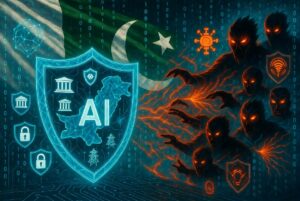
AI in Cybersecurity Pakistan 2026: Protector or Threat to Digital Pakistan?
Pakistan stands at the edge of a massive digital transformation. With rising internet use, government e-services, online banking, and growing tech startups, our digital economy is expanding fast. From paying utility bills on your phone in Lahore to filing taxes online in Peshawar or running a small business from your home in Karachi, more and more of our daily life is moving online. Yet this progress comes with serious risks. Cyberattacks are increasing every year, and artificial intelligence is completely changing the rules of the game. The big question facing us in 2026 is straightforward: Is AI going to be our strongest protector as Pakistan goes digital, or could it become a dangerous weapon in the hands of cybercriminals? Let’s look at both sides for better understanding. A few years ago, cybersecurity meant installing antivirus software and hoping for the best. Today, AI has made defense much smarter. Think of traditional
Cyber Challenges and National Response: Pakistan’s Cybersecurity Review 2025
The year 2025 was a landmark year for cybersecurity awareness in Pakistan. Coordinated efforts by government agencies, semi-government institutions, telecom operators, academic institutions, private sector organizations, and digital platforms contributed to notable progress in digital safety and cyber resilience. Citizens and organizations were increasingly educated about online risks, safe digital behavior, and proactive cybersecurity practices. Cybersecurity Awareness Week 2025: A Nationwide Effort From December 11 to 17, 2025, the Pakistan Telecommunication Authority (PTA) led the nationwide Cybersecurity Awareness Week. This initiative brought together senior leadership from PTA and UNDP, representatives from PISA, PKCERT, telecom operators, academia, and the media to reinforce a unified commitment to digital safety and information integrity across the country. The event highlighted the importance of collaboration between public and private sectors to strengthen Pakistan’s overall cyber resilience. PKCERT and the Pakistan Information Security Framework 2025 One of the most significant milestones of 2025 was the release

PKCERT Introduces PISF 2025: A Strategic Step Toward National Cyber Security
At a time when cyber threats are growing in scale and sophistication, Pakistan has taken an important step by releasing the draft Pakistan Information Security Framework (PISF) 2025. The National Cyber Emergency Response Team (PKCERT) has played a key role in safeguarding Pakistan’s digital landscape, supporting national efforts to prevent, detect, and respond to cyber threats since its establishment. The PISF, developed by PKCERT, was opened for public review and consultation in late November and early December 2025. While it has not yet been formally launched as a finalized national policy, the consultation period concluded on December 4, 2025. Even in its draft form, PISF 2025 represents a major milestone, offering a clear and structured roadmap to strengthen information security across government organizations and critical national infrastructure. What is PISF 2025? PISF 2025 sets basic rules for keeping information safe in federal and provincial government offices, departments, independent groups, companies, CERTs, and key
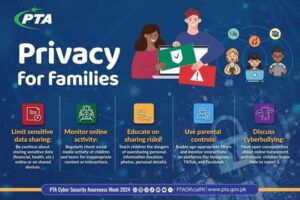
Digital Trust Begins at Home: Securing Your Connected Life
Your home is more than walls and doors. Today, it is also your phone, your Wi-Fi, and the photos you share. One small mistake can let strangers into your life. A fake message can take your money. A photo posted by your child can show where you live. This guide is for every family in Pakistan. You don’t need to be a tech expert. Just follow simple steps to keep your home safe online. One Wi-Fi for All? That’s a Big Risk Most homes in Pakistan use just one Wi-Fi name and password. Your phone, your child’s tablet, the smart TV, and even the neighbor’s phone all connect to the same network. If one device gets a virus, it can spread to everything. A guest might download a fake app. Your child might click a “win free mobile” ad. Suddenly, your bank details are at risk. The fix is easy:

Mobilizing Communities for Digital Safety in Pakistan
Digital safety is no longer a topic for experts alone. In Pakistan, more people are going online every day, from urban centers to small towns and rural villages. Social media, online banking, messaging apps, and e-learning platforms have become part of everyday life. At the same time, risks such as online scams, misinformation, cyber harassment, and privacy violations are increasing. Raising awareness about these risks is important, but it is only the first step. Awareness alone does not protect people or change behavior. Communities need to move from awareness to practical action, equipping individuals with the knowledge and skills to navigate digital spaces safely. Mobilizing communities for digital safety means creating local networks where learning, discussion, and practical guidance happen on a regular basis. What Does Mobilizing Communities for Digital Safety Mean? Mobilizing communities for digital safety means people working together to learn, share, and help each other stay safe
NCCIA Pakistan: Safeguarding the Nation’s Digital Security
In today’s fast-paced digital world, where technology connects us like never before, the rise of cyber threats poses significant challenges to individuals, businesses, and national security. From online fraud and data breaches to cyberbullying and hacking, these threats can disrupt lives and economies. To tackle this growing concern, the Government of Pakistan established the National Cyber Crime Investigation Agency (NCCIA) in May 2024, a dedicated institution to protect the nation’s digital landscape. Operational since April 2025, the NCCIA has taken over the responsibilities previously managed by the Cyber Crime Wing of the Federal Investigation Agency (FIA). This article introduces the NCCIA, its mission, and how everyday Pakistanis can engage with it to report cybercrimes and contribute to a safer digital Pakistan. A Brief History: From FIA’s Cyber Crime Wing to NCCIA Before the NCCIA was formed, cybercrime investigations in Pakistan were handled by the Cyber Crime Wing of the Federal

It Starts With Us: Community-Led Learning for Safer Digital Lives
In an increasingly digital Pakistan, conversations around cybersecurity, misinformation, and online safety are no longer just technical concerns, they are everyday realities for millions. While policies and national strategies are essential, real change often begins at the grassroots level, in local communities where digital threats are most misunderstood and least addressed. There is a growing need for community-led capacity building that reaches people where they are. This means going beyond urban centers and into the underserved areas like small towns, rural communities, and low-income urban neighborhoods, where digital literacy levels remain low and internet use is growing fast. Instead of waiting for top-down programs to trickle in, we must start building knowledge and resilience from the ground up. A major step in this direction is to organize localized, accessible training workshops and awareness sessions. These community-based gatherings can help individuals understand critical topics like: Online scams and digital fraud Cyber
Stay Safe Online Amid Cyber Threats in Pakistan: Follow PKCERT Guidance
In light of recent tensions at the border and unusual online activity, our national cybersecurity team, PK CERT, is urging everyone to stay especially alert when using the internet. During times like these, misinformation can spread rapidly, and the risk of cyber threats increases. It’s particularly important not to share any photos or videos showing the movement of our armed forces, even if shared unintentionally, as they can be misused by those aiming to harm national security. By thinking carefully before clicking, sharing, or forwarding anything online, especially sensitive visuals, we can all play a part in protecting ourselves, our communities, and our country. Let’s stay responsible and support each other both online and offline. Here are some simple tips and guidelines: 1. Don’t Share Unverified Information Spreading unchecked news can cause unnecessary panic, damage trust in authorities, and help spread false narratives. Always verify content before sharing it. Avoid

2025 Cybersecurity Goals: Lessons from 2024 and Resolutions for a Safer Digital Future
As we approach the new year, it’s time to reflect on our digital habits and commit to better cybersecurity practices. Cyber threats are constantly evolving, and staying proactive is the key to protecting your personal and professional digital footprint. Here are some practical cybersecurity resolutions to help you secure your digital life in 2025. The Biggest Cybersecurity Lessons of 2024 Before diving into resolutions for 2025, let’s recap the key lessons from 2024 that shaped our understanding of cybersecurity: AI-Powered Threats on the Rise: The increasing use of AI in cyberattacks, such as AI-generated phishing scams, highlighted the need for advanced detection systems and user awareness. Supply Chain Vulnerabilities: High-profile breaches demonstrated the importance of securing not just direct systems but also third-party suppliers and vendors. Ransomware Evolution: Ransomware attacks became more sophisticated, targeting critical infrastructure and demanding higher ransoms. The lesson? Regular backups and incident response plans are crucial.
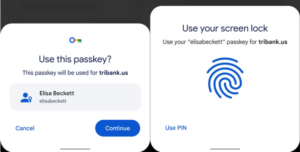
Your Passwords Are Outdated: Embrace Passkeys
Want the short version? Get the printable Password & Passkey Checklist with every step in this post condensed into a one-page action list. Passwords have been the cornerstone of digital security for decades. But as cyberattacks become more sophisticated, relying on passwords alone is no longer enough to protect your online accounts. Weak, reused, and stolen passwords are among the most common entry points for hackers to access sensitive data. Fortunately, there’s a better alternative: passkeys. In this article, we’ll explore why traditional passwords are falling short, how passkeys work, and how they can safeguard your digital presence. Why Passwords Are No Longer Secure: Passwords have several inherent vulnerabilities: Weak and Reused Passwords: Many people create weak passwords or reuse them across multiple accounts, making them easy targets for hackers. Phishing Susceptibility: Hackers trick users into entering their passwords on malicious websites, gaining access to accounts effortlessly. Cybercriminals often trick users
Why October is Cybersecurity Awareness Month: A Call to Action for Everyone
Introduction October is globally recognized as Cybersecurity Awareness Month, a time dedicated to raising awareness about the importance of cybersecurity and promoting best practices to ensure a safer digital world. This initiative is crucial in educating individuals, businesses, and institutions about the ever-evolving cyber threats and the necessary measures to protect against them. Headquarters and Administration: The initiative is spearheaded by the Cybersecurity and Infrastructure Security Agency (CISA), a component of the DHS, in partnership with the NCSA. These organizations provide resources, tools, and guidance to help individuals and businesses protect themselves from cyber threats. The headquarters for CISA is located in Washington, D.C., where strategic planning and coordination for the awareness month are conducted. The National Cyber Security Alliance (NCSA): A nonprofit organization focused on cybersecurity education and awareness. The U.S. Department of Homeland Security (DHS): A government agency responsible for national security, including cybersecurity. They launched the initiative in
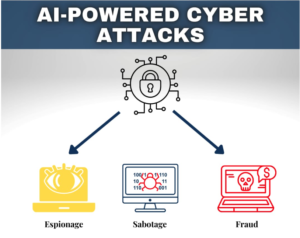
GPT-4 and AI-Generated Phishing: A New Era of Deception
In today’s digital age, we are constantly amazed by the power of artificial intelligence (AI). One such marvel is GPT-4, a highly advanced AI language model that can understand and generate human-like text. While this technology brings numerous benefits, it also has a dark side. Cybercriminals are now using AI, including models like GPT-4, to create more convincing and dangerous phishing attacks. This post will explore how AI is changing the landscape of online deception and what you can do to protect yourself. Understanding AI-Generated Phishing Phishing is a type of online scam where criminals try to trick you into giving away sensitive information like passwords or credit card numbers, etc. They often do this by pretending to be trustworthy organizations or individuals. Now, imagine these scammers equipped with AI that can write like a human. This is the new reality we are currently facing. AI-generated phishing takes traditional phishing

CrowdStrike Software Glitch: Global System Crash
A catastrophic global IT crisis unfolded on Friday, July 19, 2024, when a routine software update from cybersecurity giant CrowdStrike resulted in widespread system failures. Designed to bolster the Falcon sensor’s threat detection capabilities, the update inadvertently triggered a domino effect that paralyzed critical digital infrastructure across the globe. What actually happened? At 4:09 AM UTC on Friday, July 19, 2024, CrowdStrike initiated a standard update to its Falcon sensor for Windows systems. This update was designed to enhance the software’s ability to detect emerging cyber threats. However, a critical error within the Rapid Response component of the update caused widespread system failures. Windows devices running sensor version 7.11 and later, which were online between 4:09 AM and 5:27 AM UTC, were affected. CrowdStrike successfully reverted the faulty update at 5:27 AM UTC, halting the disruption. How Did It Happen? According to CrowdStrike’s Preliminary Post Incident Review (PIR) on July
Understanding Pakistan’s Cybercrime Legislation: PECA 2016 and the National Cyber Security Policy 2021
Note (August 2026): PECA was substantially amended in January 2025, including a new content regulator (SMPRA), a new “fake news” criminal offense, and cybercrime investigation moving to NCCIA. This post describes the original 2016 law only. For the current law, see our full breakdown: PECA 2025: What Changed, and Why It’s Contested. The internet connects us, informs us, and entertains us, but it also opens doors to cybercrime. If you’ve been a victim of online harassment, fraud, or any other cybercrime in Pakistan, the FIA Cyber Wing is there to help you fight back. Here’s a step-by-step guide on how to register and report your complaint: Reporting Options: The FIA Cyber Wing offers multiple ways to file your complaint: Online Complaint: Email Complaint In-Person Complaint Phone Complaint Pakistan has made significant strides in the domain of cyber legislation with the enactment of the Prevention of Electronic Crimes Act, 2016 (PECA
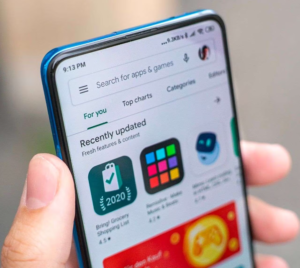
Protect Your Privacy: Essential Tips for Safe App Installs on Smartphones
In our digital age, mobile applications have become an integral part of our daily lives, offering convenience and functionality at our fingertips. However, not all apps are created equal, especially when it comes to respecting your privacy. Whether you’re using an Android or an iPhone, it’s crucial to be vigilant about the apps you download and the permissions you grant them. Here are some best practices to ensure your privacy is protected when installing new apps. Recent Advisory from PKCERT Recently, PKCERT, our government institution, issued an advisory about certain matrimonial apps that collect and share personal data of users with third-party apps. This advisory highlights the importance of being cautious about the apps you download and the permissions you grant. For more detailed information, you can read the full advisory here. Best Practices for Safe App Downloads 1. Research Before You Download Before downloading any app, take the time

Empower Yourself Against Cybercrime: How to Report Incidents to FIA Cyber Wing
Note (July 2025): This post reflects FIA’s cybercrime reporting process as it stood in April 2024. As of April 2025, cybercrime complaints are handled by NCCIA. For current reporting steps and verified contact details, see our guide: Introducing the National Cyber Crime Investigation Agency (NCCIA). The internet connects us, informs us, and entertains us, but it also opens doors to cybercrime. If you’ve been a victim of online harassment, fraud, or any other cybercrime in Pakistan, the FIA Cyber Wing is there to help you fight back. Here’s a step-by-step guide on how to register and report your complaint: Reporting Options: The FIA Cyber Wing offers multiple ways to file your complaint: Online Complaint: Email Complaint In-Person Complaint Phone Complaint Online Complaint: This is the quickest and easiest option. Visit the FIA Complaint Registration Portal (https://fia.gov.pk/complaints_dept) and choose “Register Complaint” followed by “Cyber Crime Complaint.” Fill out the form meticulously,

Professor Dr. Haider Abbas Honored with Tamgha-i-Imtiaz
On a momentous occasion on the 23rd of March 2024, Professor Dr. Haider Abbas was bestowed with the highest civil honor ‘Tamgha-i-Imtiaz’ by the Government of Pakistan. This award recognizes his exceptional contributions to the field, marking a significant moment in his esteemed career. Dr. Abbas has long been hailed as a leader in cybersecurity, known for his dedication to advancing knowledge and inspiring others in the field. His pioneering research and visionary leadership have earned him acclaim both at home and around the globe. Leading Innovations at the Forefront Professor Dr. Haider Abbas has long been recognized as a pioneer in the field of cybersecurity. His relentless pursuit of excellence and unwavering commitment to advancing the boundaries of knowledge have earned him widespread acclaim both nationally and internationally. Through his groundbreaking research and visionary leadership, he has emerged as a guiding light for aspiring cybersecurity professionals worldwide. Unmatched Contributions

Guide to Outsmarting Social Engineering Scams
Imagine you’re browsing the web when suddenly, a message pops up offering a free iPhone! Wow, right? But before you start celebrating, let’s hold on a sec. This could be a trap set by a tricky online con artist using a sneaky tactic called social engineering. What’s social engineering? Think of it as the digital version of a pickpocket at a crowded market. Instead of stealing wallets, these cyber tricksters use smooth talk and clever tricks to steal your secret information or make you do things that put you at risk online. Don’t worry, though! In this post, we’ll become internet detectives and uncover the secrets of social engineering scams. We’ll learn about the tricks these online tricksters use and how to spot them before it’s too late. Let’s unmask some common social engineering scams: Phishing: Phishing is like a trick where bad guys pretend to be someone you trust

Learning Essential Cybersecurity Terminologies
In the world of digital security, understanding key terms and concepts is crucial for keeping organizations and individuals safe from ever-evolving online threats. Let’s dive into some fundamental ideas that empower security professionals to identify and tackle potential dangers, all while keeping things simple and easy to grasp. Playing by the Rules: Compliance Think of compliance as following the rules—both inside and outside the organization. It’s about sticking to the guidelines set internally and meeting external regulations to avoid legal troubles and security breaches. Basically, it’s the digital version of making sure everyone is on the same page. Fortifying Defenses: Security Architecture Think of security architecture as the blueprint for our digital fortress. It’s a design made up of different tools and processes that work together to shield an organization from risks and outside threats. Picture it as the master plan for keeping the digital castle safe and secure. Putting
Bouncing Back from a Cybersecurity Incident
In today’s hyperconnected world, where every device is a potential gateway, cybersecurity incidents are an ever-present threat. When the inevitable occurs, having a robust recovery plan is your lifeline. This guide walks through the path to regaining your digital footing, covering the key steps involved in rebuilding resilience after a cyber incident. Why Cybersecurity Recovery Matters The sophistication of cyber threats is constantly evolving, and navigating the aftermath of a breach requires a strategic, informed approach rather than improvisation under pressure. Imagine waking up to the news that your company’s sensitive customer data has been compromised in a ransomware attack. The implications are far reaching: financial losses, reputational damage, and potential legal exposure. Without a well defined recovery plan in place beforehand, an organization can be left scrambling to contain the damage, restore operations, and rebuild the trust of customers and stakeholders, all while the clock is working against them.
Navigating Social Media Securely and Responsibly
In our digital age, social media is the heartbeat of our online connections. However, the convenience of sharing our lives comes with the responsibility of protecting our privacy and personal data. Here are seven practical steps to help you navigate social media securely. 1. Review Your Privacy Settings Take a moment to go through the privacy settings of your social media accounts. Adjust who can see your posts, friend requests, and personal information to match your comfort level. On Instagram, you can set your account to private, allowing only approved followers to see your posts and stories. Apps periodically add new features with broader default sharing settings, so it’s worth checking these settings every few months rather than assuming they stay the same. 2. Think Before You Share Be mindful of the information you share online. Avoid posting personal details such as your home address or phone number, since these

Shopping Safely Online and Avoiding Scams
Embarking on a digital shopping spree can be exciting, but it’s essential to navigate the online marketplace with caution. Protecting your personal information and avoiding scams is crucial to ensuring a safe and enjoyable online shopping experience. Here are seven practical steps to help you shop securely. 1. Shop from Trusted Websites When making online purchases, stick to well-known and reputable websites. Trusted platforms have secure payment systems and robust measures in place to protect your information. Opt for established e-commerce giants like Amazon or recognized brands’ official websites when buying products online. If you’re unfamiliar with a retailer, a quick search for reviews or complaints is worth the extra minute before entering your payment details. 2. Check for Secure Website Connections Before entering any personal information or payment details, ensure the website is secure. Look for “https://” in the URL and a padlock icon in the address bar. This

Keeping Your Children Safe Online
In the modern digital age, children are navigating the online world from a young age. While the internet offers incredible opportunities, it also presents potential risks. As parents, fostering digital responsibility is crucial to ensure your children’s safety online. Here are seven practical steps to guide you in this important endeavor. 1. Open Communication is Key Communication lays the foundation for digital responsibility. Keep an open dialogue with your children about their online activities, friends, and experiences. Regularly discuss online content with your child, and ask about their favorite websites, games, or videos to help build a comfortable space for them to share. Children who feel able to talk openly with a parent are far more likely to come forward when something online has upset or confused them, rather than trying to handle it alone. 2. Set Clear Online Rules and Boundaries Establishing rules helps your child understand the importance

Shielding Your Smartphone from Cybersecurity Threats
In the palm of your hand rests a powerful tool, your smartphone, connecting you to the digital world. However, with great convenience comes the responsibility of safeguarding your device from cyber threats. Here are seven practical steps to shield your smartphone and personal data from potential security breaches. 1. Lock Your Device with a Strong Password or PIN Your smartphone is like a digital diary, holding valuable information. Set a robust password or PIN to keep unauthorized users at bay. Instead of using common PINs like “1234,” opt for a combination that includes numbers, letters, and symbols where your device supports it. This matters more than many people assume: a Pew Research Center survey found that more than a quarter of smartphone owners, 28%, don’t use a screen lock or any other security feature to access their phone at all (Pew Research Center, March 2017). Something as simple as a


Phishing Scams: Safeguarding Your Information
Imagine the internet as a huge sea full of tricky predators called phishing scams. They want to fool you into giving away important information. But don’t worry. If you learn about these scams and take simple steps to be careful, it’s like putting on armor to protect yourself from their tricks in the digital world. 1. Understanding Phishing Phishing, a digital deception, occurs when scammers impersonate trustworthy entities. For instance, imagine receiving an email urgently requesting your bank login credentials, claiming there’s been unauthorized activity on your account and prompting you to click a link and enter your details. This isn’t a niche problem: a widely cited 2015 study by Intel Security tested nearly 19,000 people across 144 countries on their ability to spot phishing emails, and found that 97% were unable to correctly identify every phishing attempt in the test (Intel Security, 2015). Modern phishing has only gotten more

Antivirus Software: Your Shield Against Digital Threats
In our digital age, where our lives are intricately woven with technology, having a reliable shield against online threats is crucial. Enter antivirus software, your digital guardian. Here’s a look at the role antivirus protection plays, in simple terms. 1. The Digital Jungle and Its Dangers The internet, like a bustling jungle, is filled with hidden dangers, from viruses that can corrupt your files to phishing attempts aiming to steal your personal information. The sheer volume of new malware is worth understanding: cybersecurity firm G Data tracked new malware specimens emerging at a rate of one every 4.2 seconds in early 2017 (G Data Software, 2017). That pace has only increased since as attackers have industrialized malware production, which is exactly why relying on memory or manual vigilance alone isn’t realistic, and why automated detection tools matter. 2. What’s Antivirus Software, Anyway? Think of antivirus software as the immune system
Social Media Privacy Settings with Confidence
Welcome to the digital era, where social media is our virtual playground. As we share, connect, and explore, it’s crucial to understand the ins and outs of social media privacy settings. Here’s how to navigate the digital landscape with confidence, keeping your online world private and secure. 1. Why Social Media Privacy Matters In a world where oversharing is the norm, safeguarding your personal information is worth taking seriously. Concern about this is widespread and well documented: a Pew Research Center survey found that 79% of American adults are at least somewhat concerned about how companies use the data they collect about them, a figure that has stayed roughly consistent in later surveys as well (Pew Research Center, 2019). Your data is like a digital fingerprint, so it’s worth reassessing how much you’re comfortable sharing publicly and adjusting your privacy settings accordingly. 2. Review and Update Your Settings Take a

A Step-by-Step Guide to Protecting Your Digital Life
In our digital age, where everything is just a click away, securing your online life is paramount. Let’s embark on a journey to fortify your digital defense by crafting strong passwords. Here’s a step-by-step guide with practical examples to ensure your online world remains safe. Understanding the Cybersecurity Need: Cybersecurity acts as a digital bodyguard, ensuring your online information stays safe. Avoid using overly simple passwords like “password” or “123456”; they’re akin to leaving your front door wide open for cyber trouble. Creating Strong Passwords: Aim for passwords that are a minimum of 12 characters long. Mix it up with a combination of upper- and lower-case letters, numbers, and symbols. For instance, transform “password123” into a robust code like “P@ssw0rd#123.” Complexity makes it significantly harder for cyberattackers to crack your password. Avoiding Easy-Peasy Passwords: Steer clear of using personal information such as your birthday or common words. Each account deserves

CyberWalk: A Mission to Empower Digital Citizens
Greetings, digital explorers! Today marks the dawn of a new era in your online journey as we introduce CyberWalk—a platform with a mission to empower and guide digital citizens through the intricate landscapes of the digital world. In this guide, we’ll walk you through the essence of CyberWalk and provide step-by-step guidance on how to embark on this empowering journey. Step 1: Understanding the CyberWalk Mission At the heart of CyberWalk lies a commitment to empower digital citizens with knowledge. In a rapidly evolving digital landscape, understanding the fundamentals of cybersecurity is no longer a luxury but a necessity. Our mission is clear: to make cybersecurity accessible, understandable, and applicable to everyone. Think of CyberWalk as your digital guide, a trustworthy companion on your journey through the complexities of the online realm. Our mission is to provide you with the tools and knowledge to navigate this digital landscape confidently. Step

The Fundamentals of Cybersecurity
Lesson 1 of the CyberWalk Beginner Track. New here? Start with this post, then follow the track below to build up your digital safety knowledge step by step. See the full Beginner Track → Welcome, digital pioneers! In the vast landscape of the internet, where data flows like a digital river, ensuring your safety is paramount. Cybersecurity is your shield against the ever-evolving threats that lurk in the digital shadows. In this primer, we’ll delve into the fundamentals of cybersecurity, breaking down complex concepts into actionable insights to fortify your digital defenses. Understanding the Basics At its core, cybersecurity is the practice of safeguarding digital systems, networks, and data from unauthorized access, attacks, and damage. It’s the virtual lock and key that keeps your digital world secure. Just as you lock your front door to protect your home, cybersecurity locks down your digital presence. It prevents unauthorized users from entering