

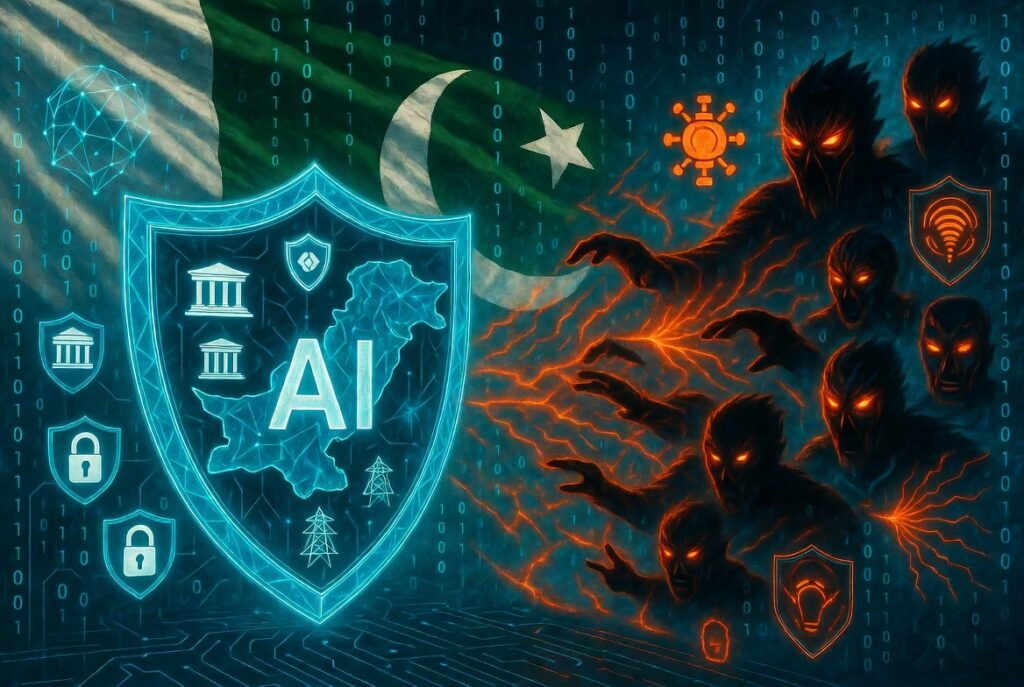
Pakistan stands at the edge of a massive digital transformation. With rising internet use, government e-services, online banking, and growing tech startups, our digital economy is expanding fast. From paying utility bills on your phone in Lahore to filing taxes online in Peshawar or running a small business from your home in Karachi, more and more of our daily life is moving online. Yet this progress comes with serious risks. Cyberattacks are increasing every year, and artificial intelligence is completely changing the rules of the game. The big question facing us in 2026 is straightforward: Is AI going to be our strongest protector as Pakistan goes digital, or could it become a dangerous weapon in the hands of cybercriminals? Let’s look at both sides for better understanding.
A few years ago, cybersecurity meant installing antivirus software and hoping for the best. Today, AI has made defense much smarter. Think of traditional security like a guard checking every visitor manually. It works, but it is slow and can miss clever tricks. AI, on the other hand, learns from huge amounts of data, spots unusual patterns instantly, and responds in real time.
In Pakistan, this is already making a difference. When your bank app suddenly asks for extra confirmation on a transaction because something looks unusual, that is often AI working in the background. Banks are using it to detect fraud quickly. Government systems like NADRA rely on similar technology to catch unauthorized access attempts. Even the national power grid is beginning to use AI to monitor for suspicious activity that could point to a cyber-physical attack. Local companies are stepping up too. Pakistani startups such as SOCByte have developed tools like Dexter, the country’s first homegrown AI-powered cybersecurity platform. These solutions help security teams respond faster and more effectively. With the number of cyberattacks on Pakistani systems rising sharply, such local innovations are becoming increasingly important.
The government has shown strong commitment through recent initiatives. The successful Indus AI Week, held from February 9th to 15th, 2026, brought together policymakers, experts, innovators, and youth across the country. This national platform, led by the Ministry of Information Technology, featured high-level summits, techathons, job fairs, and hands-on AI training sessions. It highlighted the importance of building a secure and responsible AI ecosystem for Pakistan’s future.
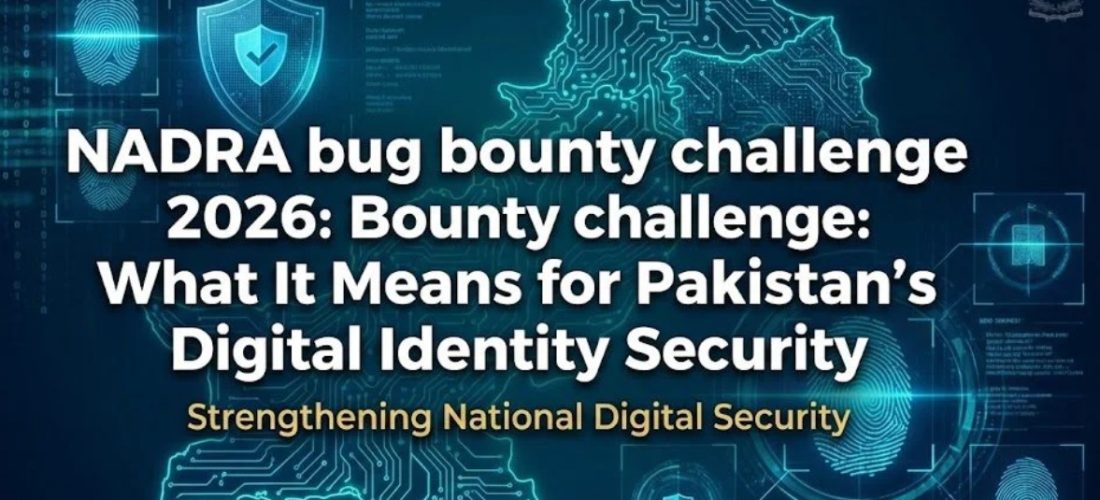
Similarly, NADRA launched its first-ever Bug Bounty Challenge 2026 earlier this year in collaboration with the Higher Education Commission (HEC) and the National Cyber Emergency Response Team (PKCERT). This nationwide competition encouraged university students and ethical hackers to identify vulnerabilities in digital identity systems, promoting responsible cybersecurity practices and strengthening public trust in our national databases.
However, we cannot ignore the other side. AI is like a double-edged sword. The same capabilities that help protect us are also being used by attackers to create more sophisticated threats.
Criminals now use AI to craft highly realistic phishing emails and messages that sound exactly like trusted sources. Deepfake videos and voice cloning are making social engineering scams far more convincing and dangerous. Ransomware groups can scan systems faster and hide their activities longer with the help of AI. In Pakistan, we are already seeing a rise in such advanced attacks targeting telecom networks, government portals, and businesses. These threats feel closer to home when you consider how easily they can exploit trust. A fake video or voice message that appears to come from a family member or colleague can cause real harm, especially when it spreads quickly through WhatsApp and social media.
Another growing concern is that as we rely more on AI for security, hackers are learning how to trick those very systems. If we adopt AI without strong safeguards, we risk creating new vulnerabilities instead of solving existing ones. So where does this leave Pakistan in 2026? We are making steady progress, but significant challenges remain, including a shortage of skilled professionals, infrastructure gaps, and the need for clearer regulations and better coordination. The encouraging part is that awareness is growing among policymakers, businesses, and the public, as clearly seen in events like Indus AI Week and the NADRA Bug Bounty Challenge.
Ultimately, AI is neither purely good nor purely bad. It is a powerful tool, and its real impact will depend on how responsibly we develop and use it. If Pakistan continues to invest in local talent, establish clear ethical guidelines, promote collaboration between government and industry, and raise awareness among citizens, AI can become a major strength for our digital future.
The choices we make today will shape tomorrow. By balancing innovation with caution, we can work toward a secure and thriving Digital Pakistan that benefits everyone.