


The year 2025 was a landmark year for cybersecurity awareness in Pakistan. Coordinated efforts by government agencies, semi-government institutions, telecom operators, academic institutions, private sector organizations, and digital platforms contributed to notable progress in digital safety and cyber resilience. Citizens and organizations were increasingly educated about online risks, safe digital behavior, and proactive cybersecurity practices.
Cybersecurity Awareness Week 2025: A Nationwide Effort
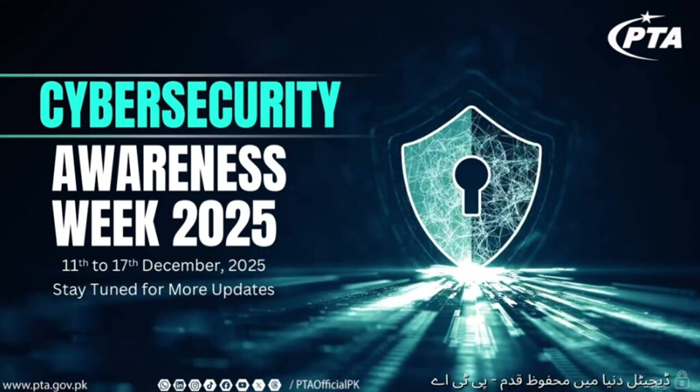
From December 11 to 17, 2025, the Pakistan Telecommunication Authority (PTA) led the nationwide Cybersecurity Awareness Week. This initiative brought together senior leadership from PTA and UNDP, representatives from PISA, PKCERT, telecom operators, academia, and the media to reinforce a unified commitment to digital safety and information integrity across the country. The event highlighted the importance of collaboration between public and private sectors to strengthen Pakistan’s overall cyber resilience.
PKCERT and the Pakistan Information Security Framework 2025
One of the most significant milestones of 2025 was the release of the draft Pakistan Information Security Framework (PISF) 2025 by the National Computer Emergency Response Team (PKCERT). This framework provides structured guidelines and best practices for organizations to enhance information security, respond to cyber threats, and strengthen critical national infrastructure. The draft was opened for public consultation in late November and early December 2025, concluding on December 4. While it is not yet finalized as a national policy, PISF 2025 is a critical step toward establishing a robust national cybersecurity posture in Pakistan.
Digital Growth and Emerging Challenges
In June 2025, PTA announced that Pakistan had crossed 200 million telecom subscribers. Broadband users reached approximately 150 million, and active social media users exceeded 70 million. While this rapid digital expansion reflects positive growth, it also increases exposure to cyber threats and online fraud, making proactive cybersecurity awareness more important than ever.
NCCIA: Strengthening Law Enforcement Against Cybercrime
The National Cyber Crime Investigation Agency (NCCIA) took significant action in 2025:
- Investigated 2,196 major cybercrime cases
- Achieved a 36% resolution rate
- Made 2,902 arrests and pursued 774 prosecutions
- Dismantled five major cybercrime networks
- Recovered over PKR 461 million for victims
- Frozen 46,056 fraudulent bank accounts and digital assets
- Conducted targeted actions against online child exploitation
- Trained over 300 law enforcement officers
- Organized nationwide cybersecurity workshops to address emerging threats
These efforts demonstrate a comprehensive, multi-layered approach to combating cybercrime in Pakistan.
CyberWalk.pk Contribution in Cybersecurity Awareness
My personal journey in cybersecurity awareness began in September 2022 with my first column on rising cybercrime trends published on ProPakistani.pk. From March 2023, I regularly contributed technology and digital security columns to local newspapers. In November 2023, I formally launched CyberWalk.pk, a blog aimed at raising citizen awareness on online safety and emerging cyber threats. Recognizing these efforts, I was honored with the ISOC Community Fellowship 2025, which allowed me to represent Pakistan at the Asia Pacific ISOC Community Workshop in Kuala Lumpur, Malaysia, in October 2025. This experience strengthened my commitment to promoting cybersecurity awareness, collaboration, and community engagement at both local and global levels.

Collective Efforts for National Cybersecurity
The events of 2025 show that cybersecurity awareness cannot rely on a single organization. It requires coordinated efforts among state institutions, academia, telecom operators, media, and community experts. While Pakistan has made significant strides, the rising sophistication of cyber threats means that ongoing awareness, education, and community engagement are critical to protecting citizens from online fraud and digital attacks.
Scaling Cyber Awareness to Grassroots Communities in 2026
Looking ahead, 2026 must focus on expanding cybersecurity awareness beyond urban centers. In my view, Grassroot Level Community Circles should be established in villages, underserved towns, and remote areas, particularly where internet access is limited and digital literacy is low. These programs would provide students, youth, teachers, and local communities with practical guidance on online safety, secure digital behavior, and basic cybersecurity hygiene. By bridging the digital awareness gap, such initiatives can help foster a sustainable cybersecurity culture across Pakistan and empower citizens to navigate the digital world safely.
Conclusion: A Call to Action
As responsible digital citizens, we all have a role to play in strengthening Pakistan’s cyber resilience. By adopting cybersecurity best practices, following PTA and PKCERT guidance, and promoting awareness within our communities, we can collectively ensure a safer and more secure digital future for all.